

August 24, 2026
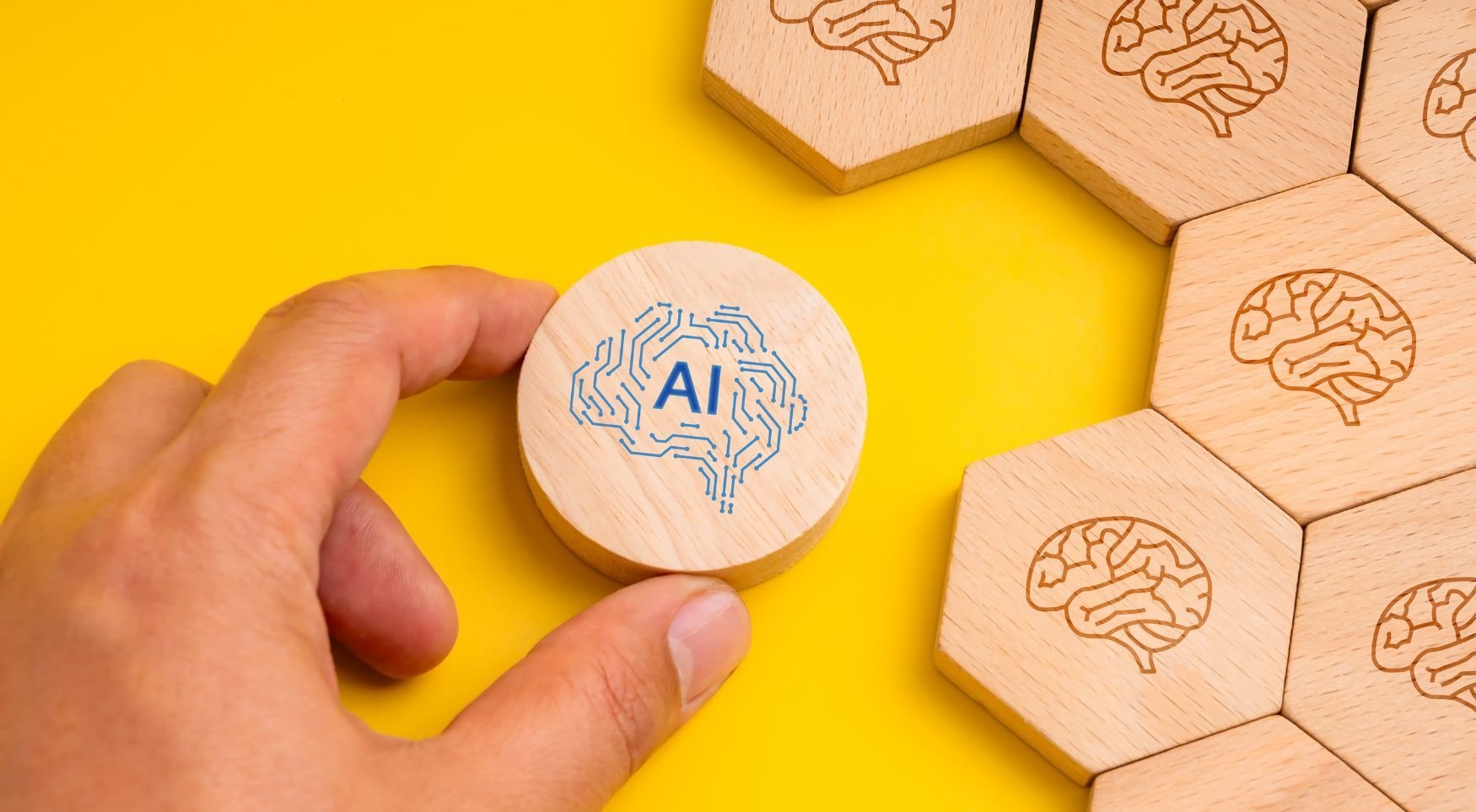
Artificial intelligence has quickly become one of the biggest business priorities of our time. Boardrooms are aggressively pushing AI adoption and strategies, eager to be at the forefront of a monumental change in business and daily life.
Yet amid all the excitement, many organizations are discovering a surprising truth: The biggest obstacle to AI success isn't just the technology itself. It's helping people embrace an entirely new way of working.
After helping organizations navigate complex transformations for decades – from mergers and acquisitions to digital transformation, culture change, and organizational restructuring – we've learned that technology rarely determines success. Instead, it’s all about people. AI is simply the latest, and the most significant, example of this.
Organizations that treat AI as simply an implementation will likely struggle to achieve meaningful adoption. Those that recognize AI as an enterprise-wide change initiative – one requiring leadership, communication, trust, and behavior change – will be far better positioned to realize its promise.
That's because AI doesn't simply introduce another software platform. It changes how knowledge work gets done. It reshapes decision-making, collaboration, problem-solving, and even how employees think about the value they bring to the organization.
What Defines Successful AI Change Management?
AI change management is the process of helping people successfully adopt new ways of working with artificial intelligence.
Successful AI change management helps employees understand:
- Why the organization is investing in AI
- What is changing and what isn't
- How AI will affect their day-to-day work
- What new skills and behaviors are expected
- Where they can ask questions and receive support
- How success will be measured over time
Let’s face it, AI is a worry for many employees. It raises lots of concerning questions, such as:
- Will my role change?
- Will AI replace parts of my job?
- Will I be expected to learn entirely new skills?
- Can I trust AI's recommendations?
- What happens if I make a mistake using AI?
Answering these difficult questions requires something technology alone can’t provide. It calls for thoughtful leadership and intentional communication. Organizations that succeed will help employees understand why AI matters, where it fits into the organization's future, and how people remain central to that future. In other words, the best leaders approach AI as a change management challenge, not simply a technology deployment.
Why AI Change Management Is Harder Than Any Change Before It
Every major technology transformation has required organizations to adapt, but AI is even more challenging. Here are some of the main reasons:
1. AI Is All-Encompassing Change
Instead of simply automating routine tasks, AI increasingly assists with writing, research, analysis, coding, customer interactions, forecasting, brainstorming – activities that have traditionally defined knowledge work. That's why AI creates a very different emotional response. Employees aren't just learning another system, but worried about their place in the system and whether they’ll still have a job.
2. There’s Great Uncertainty Around When, Where, and How the Change Will Play Out
For a lot of employees, the toughest part of any change is adopting the unknown. And with AI, there’s a lot more that’s still unknown, both in the short-term and long-term. In AI’s earliest days, many leaders predicted an almost immediate upending of the workforce. Instead, that didn’t happen for many organizations. In fact, some organizations that laid off large numbers of people – attributing the layoffs to AI – are now bringing people back.
This uneven narrative around AI brings even more uncertainty today than when it first rolled out. Some of our clients are reluctant to be first in major AI transformations, preferring instead to wait to see how the change plays out. Others are questioning how soon this massive change is going to affect the workforce on a widespread scale.
3. AI Challenges Professional Identity and Self-Worth
Many organizational changes affect workflows, but AI affects identity. For decades, employees have built careers around specific expertise, such as the ability to analyze information, solve problems, create presentations, write reports, or answer difficult questions. Now, AI has the potential to assist with many of those same activities in seconds.
This doesn't diminish the importance of human intelligence. But without strong leadership communication, many interpret AI through the lens of fear rather than opportunity.
4. AI Is Arriving During an Era of Change Fatigue
On top of AI change, most organizations are simultaneously navigating hybrid work, organizational restructuring, new operating models, evolving customer expectations, economic uncertainty, cybersecurity threats, and continuous digital transformation.
This has employees feeling burned out and overwhelmed. The Grossman Group's national change study with The Harris Poll found that most employees believe they can realistically absorb only one or two major organizational changes each year, while more than half of leaders plan for three or more.
The Costs of Getting AI Change Management Wrong
Technology deployments notoriously fall short when employees are poorly trained, poorly communicated with, and ill-prepared. Among the most common leadership mistakes is that projects are rushed and the tools themselves become the focus of change rather than employee adoption. This can lead to employee burnout, dissatisfaction, and turnover.
Not surprisingly, one of the most common mistakes in AI change management is poor communication. After all, employees rarely oppose change simply because they dislike learning something new. More often, they resist uncertainty. Without clear communication, people naturally begin filling information gaps with their own assumptions or rumors.
Those assumptions often sound like:
- “Leadership already knows more than they're telling us.”
- “I'll be left behind if I don't become an AI expert immediately.”
- “No one really knows what they're doing.”
Left unaddressed, these perceptions quickly erode trust. That's why communication cannot be treated as an afterthought. Research consistently shows that organizations dramatically improve their chances of successful transformation when employees understand the purpose behind the change, leaders remain visible throughout the process, and communication continues long after launch, not just during it.
Our research with The Harris Poll similarly found that organizations are 3x more likely to succeed when employees are fully bought into the change and far more likely to struggle when leadership visibility and communication fall short.
The goal of AI change management isn't simply adoption, but confidence. When employees understand why AI is being introduced, trust leadership's intentions, and believe they'll be supported as they learn, they're far more willing to experiment, adapt, and ultimately integrate AI into the way they work.
Leaders must explain why AI deserves employees' attention, how it connects to the organization's broader strategy, and how it will ultimately make work better, not simply different. Leaders who openly discuss how AI will augment human capabilities rather than simply promising employees they have "nothing to worry about" build far greater credibility and trust.
A Framework for Successful AI Change Management
Many leaders we work with are landing on a more nuanced message to help the AI change management message land better. Many believe AI will have major impacts on the way we all work but won’t necessarily lead to as many job losses as once thought. Instead, they share with their teams that AI has the potential to free people up from the more mundane tasks so that they can do even more strategic, impactful work.
Walmart CEO Doug McMillon summed up this sentiment well, arguing that AI will drive transformation, but it’s up to leaders to determine how it plays out. He argued that organizations have a responsibility to help employees transition through the disruption by investing in reskilling and upskilling, redesigning jobs rather than eliminating them, and creating new career paths as AI changes the way we work.
“Our goal is to create the opportunity for everybody to make it to the other side,” McMillon said.
McMillon’s message is at the heart of smart AI change management. Technology may drive transformation, but leaders determine whether people are left behind or brought along on the journey.
The Grossman Group has what we call the “5 S’s Framework” to help leaders better implement AI change. While originally designed as a broader change management framework, each of the five elements becomes even more important when applied to AI.
1. Scale: Recognize that AI Change Happens Across the Organization
One of the biggest mistakes organizations make with AI is treating adoption as a series of isolated technology deployments. A team may introduce an AI assistant in marketing, a coding tool in engineering, or automation in operations. But over time, AI changes how all people communicate, make decisions, solve problems, and define expertise.
Successful organizations approach AI adoption as an enterprise transformation:
- Which roles will be most affected?
- Where will employees need new skills?
- Which workflows need to be redesigned?
- How quickly can the organization absorb change?
- Where should experimentation happen before broader rollout?
AI transformations also need to balance urgency with capacity. Moving too slowly can leave organizations behind. Moving too quickly without preparing employees can create resistance, confusion, and declining trust.
2. Story: Creating Meaning Before Creating Momentum
Too many organizations stumble when the change journey narrative is not clear and compelling. Employees do not experience AI as an abstract business strategy, but very personally. Naturally, they are asking questions such as: Will my job change? Will my skills still matter? Is this technology here to help me or replace me?
Without a compelling and authentic narrative, uncertainty fills the vacuum, and worry turns to burnout and quiet quitting. Given this, leaders need to land the story and answer the questions employees are actually asking, such as:
Why are we adopting AI?
The answer cannot simply be “to increase efficiency.” Employees need to understand the broader purposes, such as improving customer experiences, reducing repetitive work, enabling creativity, or helping people focus on higher-value activities.
What will change?
Employees need clarity about how workflows, expectations, and roles may evolve.
What will not change?
This is often the most overlooked question. People need reassurance about organizational values, human judgment, relationships, and the importance of employee expertise. The strongest AI stories position technology as a partner in human achievement, not a replacement for human contribution.
3. Strategy: Moving Beyond Announcements to Sustained Adoption
Many technology initiatives fail because organizations confuse communication with change management. A launch email, a training session, or a leadership presentation does not create adoption. AI adoption requires an ongoing strategy that combines communication, education, reinforcement, and feedback.
A strong AI change strategy includes helping leaders at all levels understand what AI can do and how employees will experience the transition. The strategy should also ensure managers become the critical bridge between organizational strategy and employee reality. They need the confidence and tools to answer questions, address concerns, and model new behaviors.
Further, employees need more than technical instructions. They need opportunities to experiment, ask questions, and understand how AI applies to their actual work. It can’t be overstated: Communication has to be top-notch, with frequent feedback loops where employees can regularly share what’s working, what’s confusing, and what barriers they face.
4. Stakeholders: Mobilize the People Who Make Change Possible
Successful AI adoption depends on understanding the unique and critical role all groups play. Executives help set the vision and resources. Managers translate strategy into everyday behaviors. Employees share practical insights about how work actually happens. AI champions and early adopters demonstrate possibilities and help peers build confidence.
A common mistake is relying only on senior leaders to drive adoption. Employees often trust colleagues and direct managers more than corporate announcements. Following that cue, organizations should identify influential employees across functions who can serve as AI ambassadors. These employees can experiment, share lessons learned, and help normalize new ways of working.
5. Sentiment: Understand How People Feel About AI – All Along the Journey
Perhaps the most important, and often most overlooked, element of AI transformation is sentiment. Leaders need to recognize that people's reactions to AI are complex. They may feel excitement and anxiety at the same time. For instance, an employee may realize an AI tool could save them multiple hours every week, while simultaneously fearing that will prompt leadership to decide their role is no longer necessary.
Organizations that ignore employees’ perceptions risk losing trust. Leaders counter that by actively measuring such variables as:
- Employee confidence using AI tools
- Concerns about job impact
- Perceptions of leadership transparency
- Comfort with experimentation
- Understanding of organizational goals
The ultimate goal is not to eliminate uncertainty. After all, uncertainty is a natural part of transformation. However, leaders who build real trust help employees move forward with added security and confidence.
The Communication Playbook for AI Change Management
Here are some key steps for communicating AI change management that have worked well for the organizations we support.
Tackle the Elephant in the Room
We’ve said it many times, but can’t emphasize this point enough: Throughout the AI adoption journey – meaning for many, many years – this top question will be ever-present: Is AI replacing jobs?
This is where it’s critical to get the answer right and to never sidestep it. A simplistic answer creates distrust. A better conversation acknowledges that some tasks may change, some roles may evolve, but new opportunities will emerge. Leaders need to show that they care about this and personally believe that successful AI adoption will always be about people.
Start with the “Why”
Employees need to understand and communicate the context and organizational purpose behind AI adoption. This is where knowing what’s on your audience’s mind is critical. Employees will naturally want to know the following: What’s in this for me? Which parts of my work will AI influence? What skills will I need in the future? How will success be measured?
The message should avoid framing AI purely as a cost-saving initiative. When employees hear only efficiency language, they often interpret it as a threat.
These strong messages connect AI to meaningful outcomes:
- Helping employees spend less time on repetitive work
- Improving customer experiences
- Enabling faster innovation
- Enhancing decision-making
- Creating opportunities for employees to develop new skills
Make Leaders Visible
During periods of uncertainty, employees look to leaders for confidence and direction. Employees do not expect leaders to have every answer. They expect leaders to be transparent about how they are finding answers.
Leaders should:
- Share their own AI learning journey
- Acknowledge uncertainty honestly
- Explain the decisions and tradeoffs
- Demonstrate responsible AI use
Equip Managers as Change Leaders
Managers are key to making strategy a reality, yet many managers are asked to lead AI adoption without receiving the support they need. A manager who feels uncertain about AI cannot effectively build confidence among employees.
Managers should learn:
- Basic AI concepts
- Organizational AI strategy
- Responsible AI principles
- How to lead through uncertainty
- How to encourage experimentation
Organizations should provide managers with:
- Talking points
- Frequently asked questions
- Examples of AI use cases
- Guidance on handling employee concerns
- Training on responsible AI practices
Promote a Message of Support for Healthy Experimentation
AI adoption requires psychological safety. Employees must feel comfortable experimenting, making mistakes, and learning. If organizations communicate only rules and risks, employees may avoid using AI altogether or use it privately without guidance.
Effective organizations create safe spaces for experimentation. Examples include:
- AI innovation labs
- Pilot programs
- Peer learning groups
- Office hours with experts
- Communities of practice
How to Measure AI Change Management Success
Organizations often measure technology adoption through metrics with the number of licenses issued, AI tools deployed, and users activated. While these measures obviously matter, they do not tell the whole story. True AI transformation requires measuring human adoption.
Given that reality, organizations should consider the following additional measures and track the numbers over time, keeping on top of what’s working and what’s stalling.
- Confidence: do employees feel capable using AI tools?
- Capability: are employees developing new skills?
- Behavior change: are employees incorporating AI into meaningful workflows?
- Trust: do employees believe leadership is approaching AI responsibly?
- Business impact: is AI improving outcomes for customers, employees, and the organization?
The ultimate measure of AI success is not whether technology is deployed. It is whether people are empowered.
How The Grossman Group Helps Organizations Succeed at AI Adoption
Successful AI adoption is clearly a top priority for countless organizations today, and change communication consulting of this sort is core to what we do at The Grossman Group. We understand that AI adoption strategies are not a one-size-fits-all proposition. We partner with organizations to develop and implement strategic communication plans and culture change initiatives that address all levels of employee resistance to change and help your leaders feel more confident in managing the changes with their teams.
We identify potential resistance points, understand your organizational culture, and assess employee readiness and needs for successful change. From there, we develop a specialized plan to address your unique challenges.
Our team also helps with writing compelling messages for all employees, addressing what change means for them and how it will improve their daily working lives. Knowing that communicating the why is so critical, we have deep breadth and expertise in telling an inspirational organizational story.
We also design comprehensive AI change communication plans, utilizing the most effective channels for your organization’s culture and workforce. From digital platforms to face-to-face forums, we ensure the AI change or AI adoption story reaches employees where they are.
Most importantly, we help employees feel the change is happening with them rather than to them, so they are part of the solution, aligned, and ready to embrace what’s ahead.
To explore the ways we can support you, contact us today.
The Bottom Line
AI represents one of the greatest opportunities for organizational transformation in decades. But technology alone does not create transformation – people do. The organizations that succeed recognize that fundamental truth.
After all, the future of work will not be defined solely by what artificial intelligence can do. Instead, it will be defined by what humans and artificial intelligence can accomplish together.
What do you see as some of the biggest lessons learned so far in AI implementation? What can we all learn from that?
—David Grossman
For CCOs navigating AI rollouts – explore how The CCO Advisory can help you build a modern communications function equipped to lead through AI-driven change.

Comments on this post